S-table
A coffee table with no fixed support. It rests on water beads, so every cup tilts it and the people around it keep it in balance together.
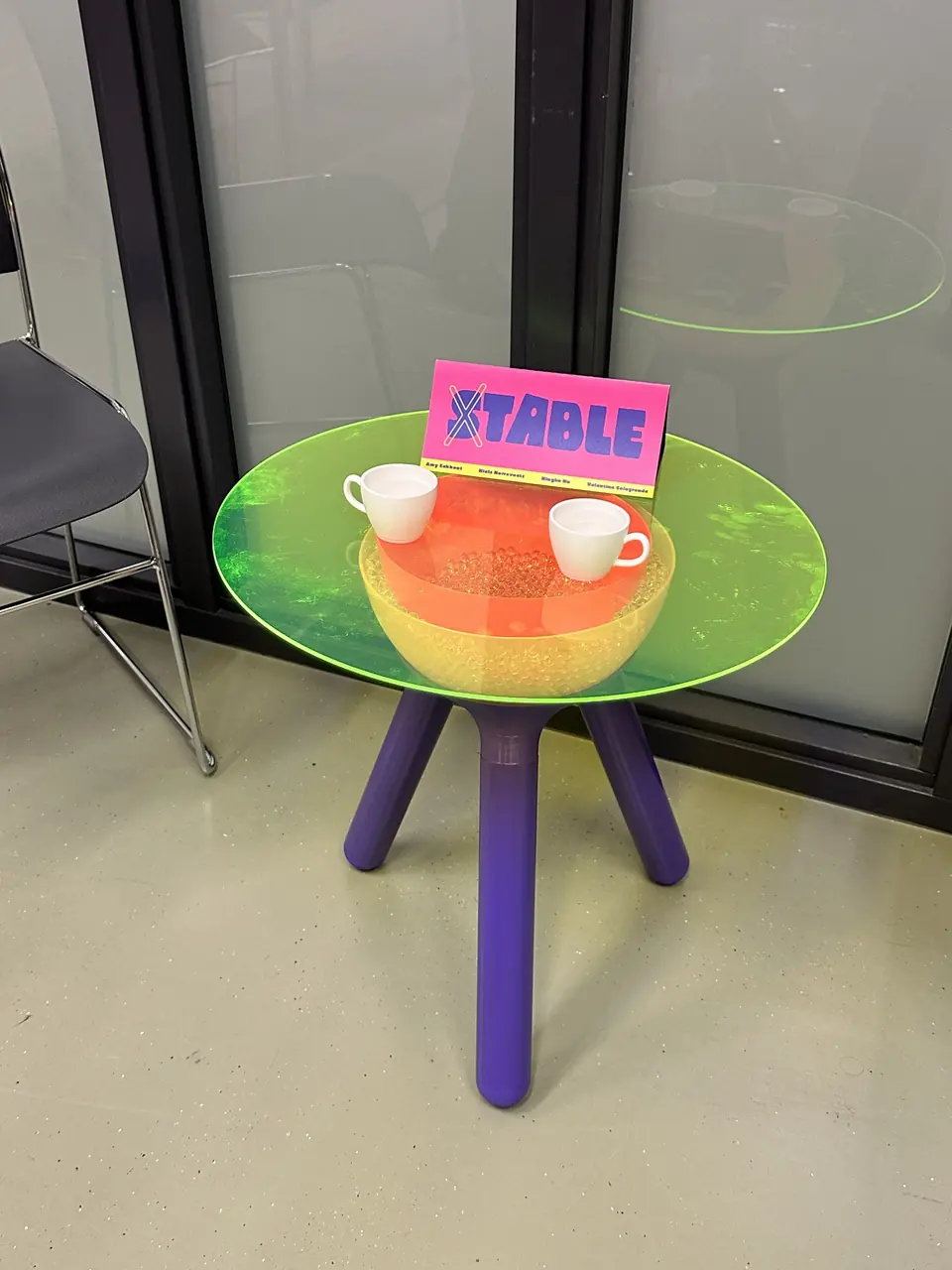
Research through Making, in a weekly rhythm: read a text, make a prototype in response, reflect on it. STABLE was the fifth prototype and grew out of the four before it.
What happens when a table's stability has to be made by the people sitting at it?
The capacity to act is spread across an assemblage of people, things and forces working together (Bennett, 2010).
In S-table: cups, water beads, gravity and the people at the table keep it level between them.
- Note 01 String figures, after Haraway: paper plates, string and burnt matches knotted into a temporary tangle of relations. Making let us stay with the confusion a little longer.
- Note 02 Diffraction diorama, after Barad and Bennett. People mostly described what they saw. More filters and references made it harder to read.
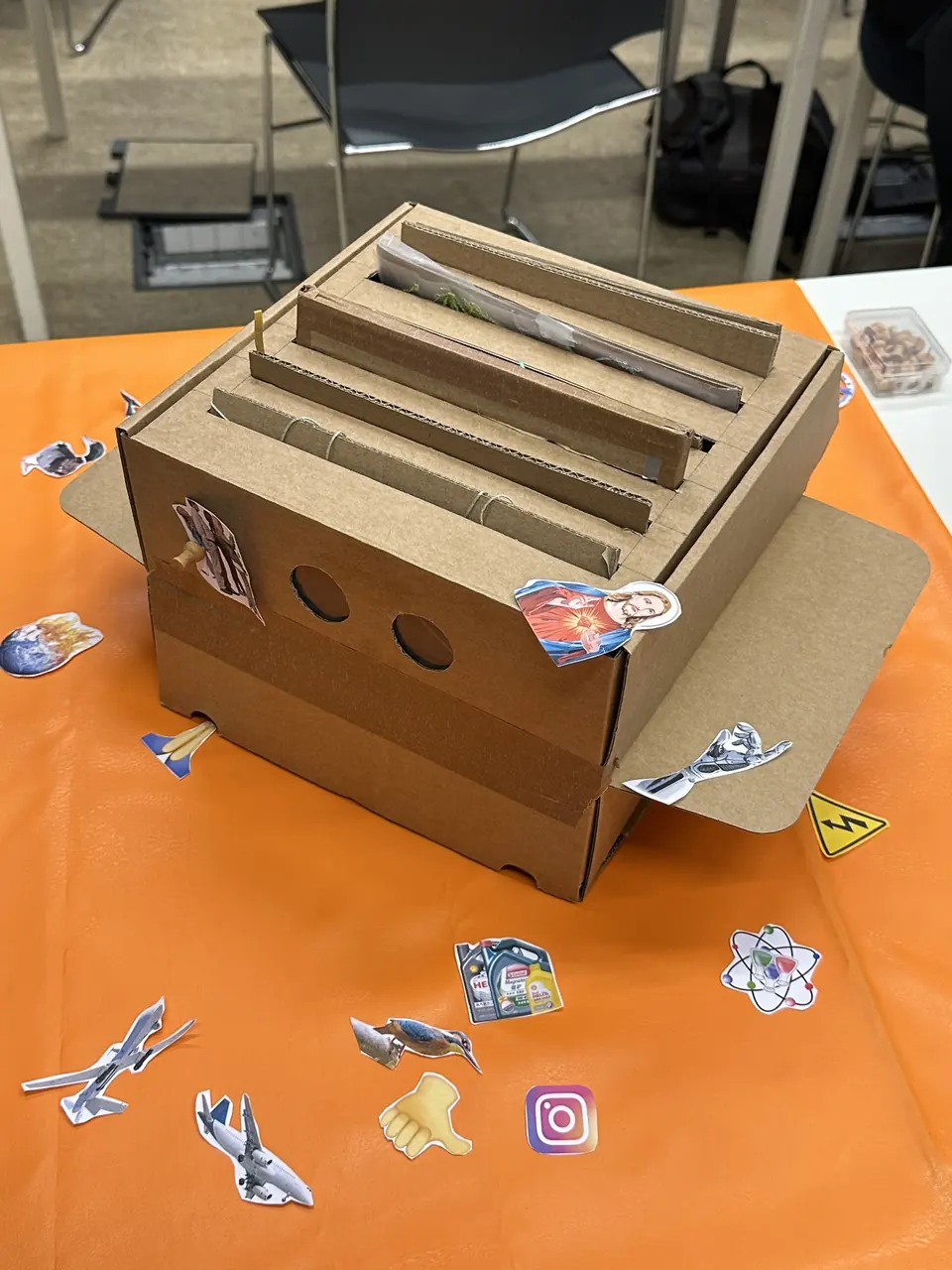
- Note 03 Stupid tech, after Halberstam's low theory: a family of devices that fail on purpose. Spread over many objects, the provocation lost its focus.
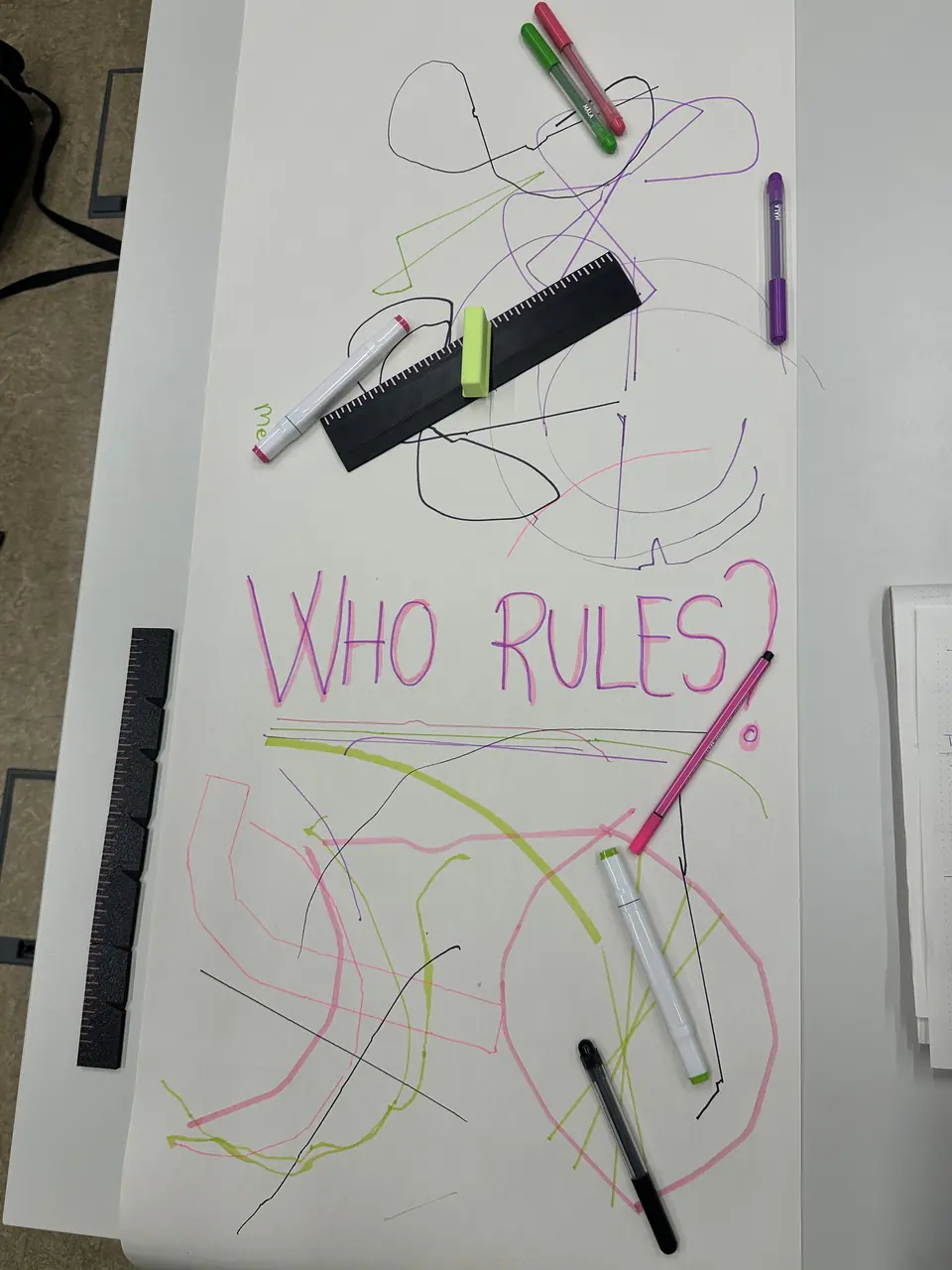
- Note 04 Who rules?, after Ingold and Pye: a ruler used the wrong way. Misuse opened new interactions.


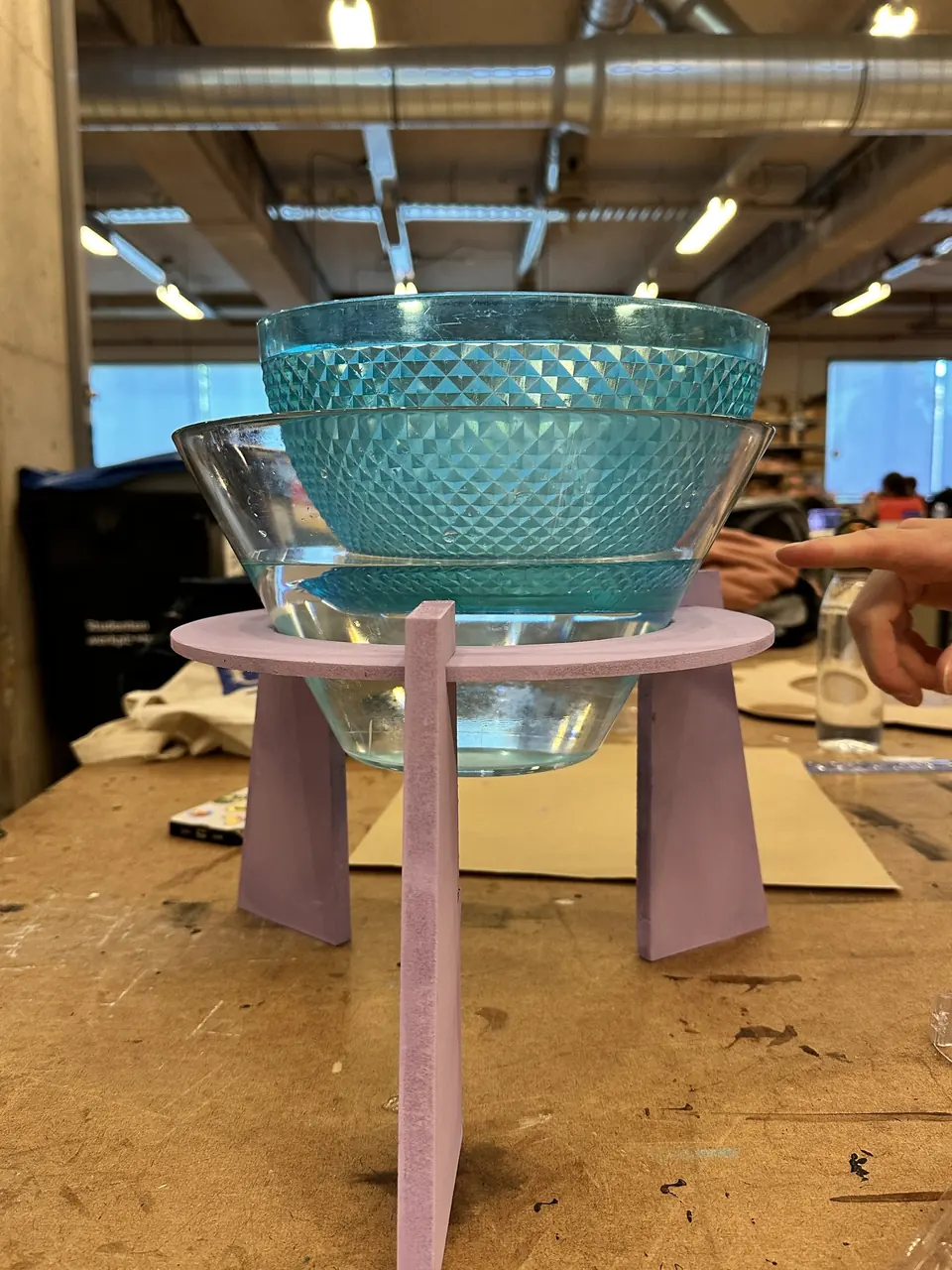
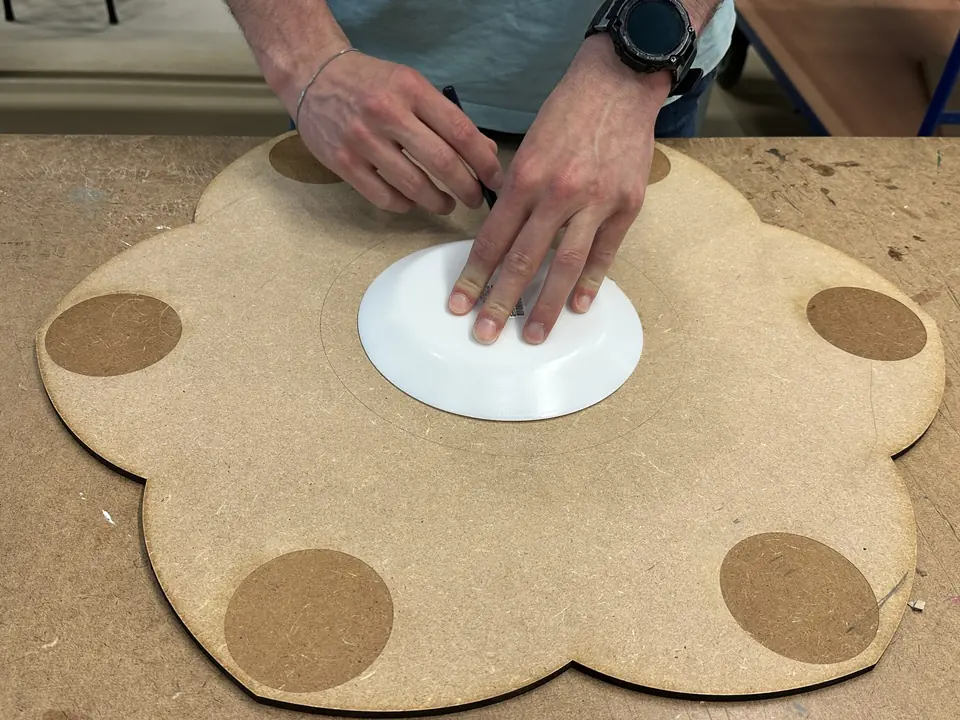
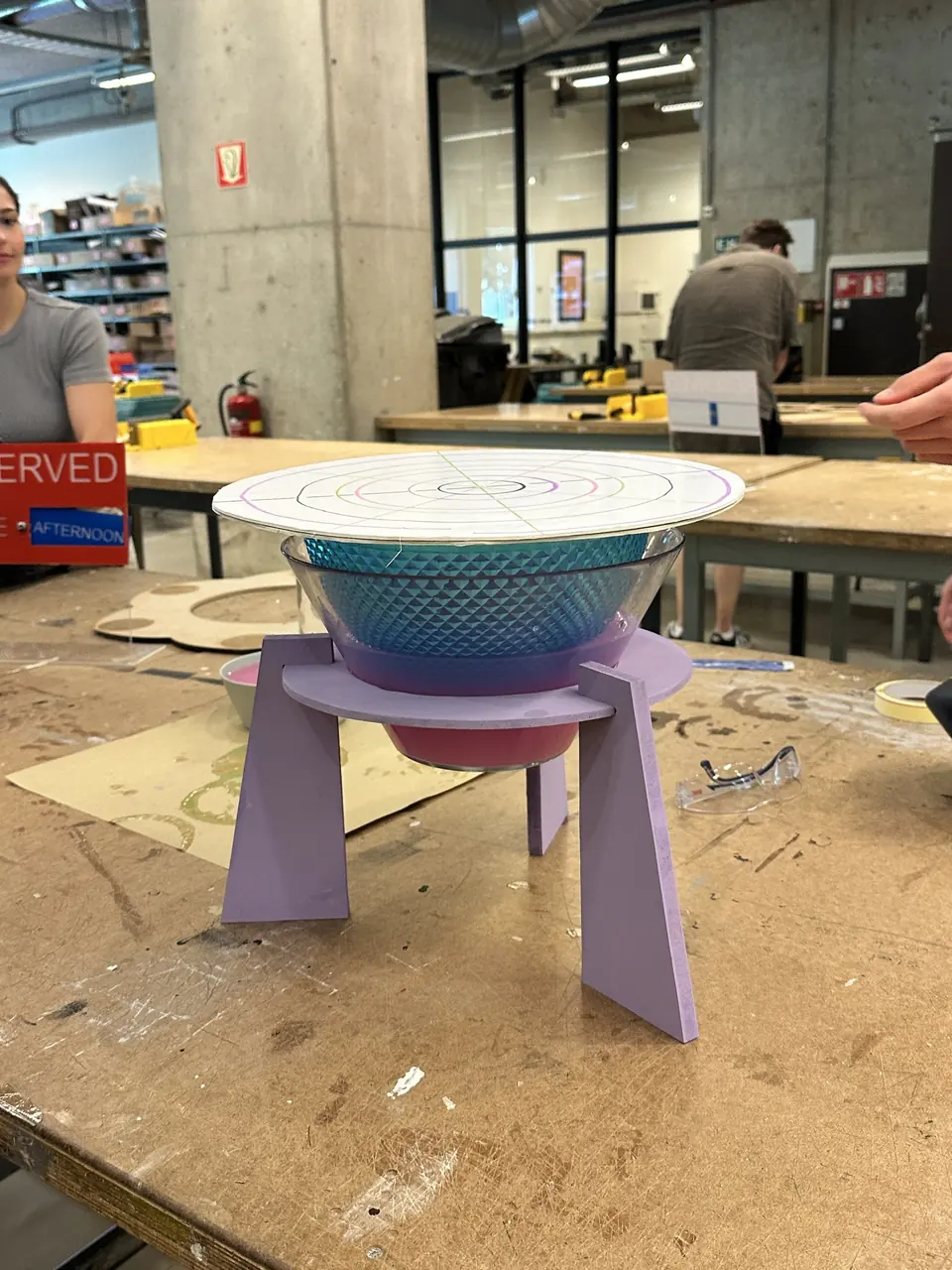
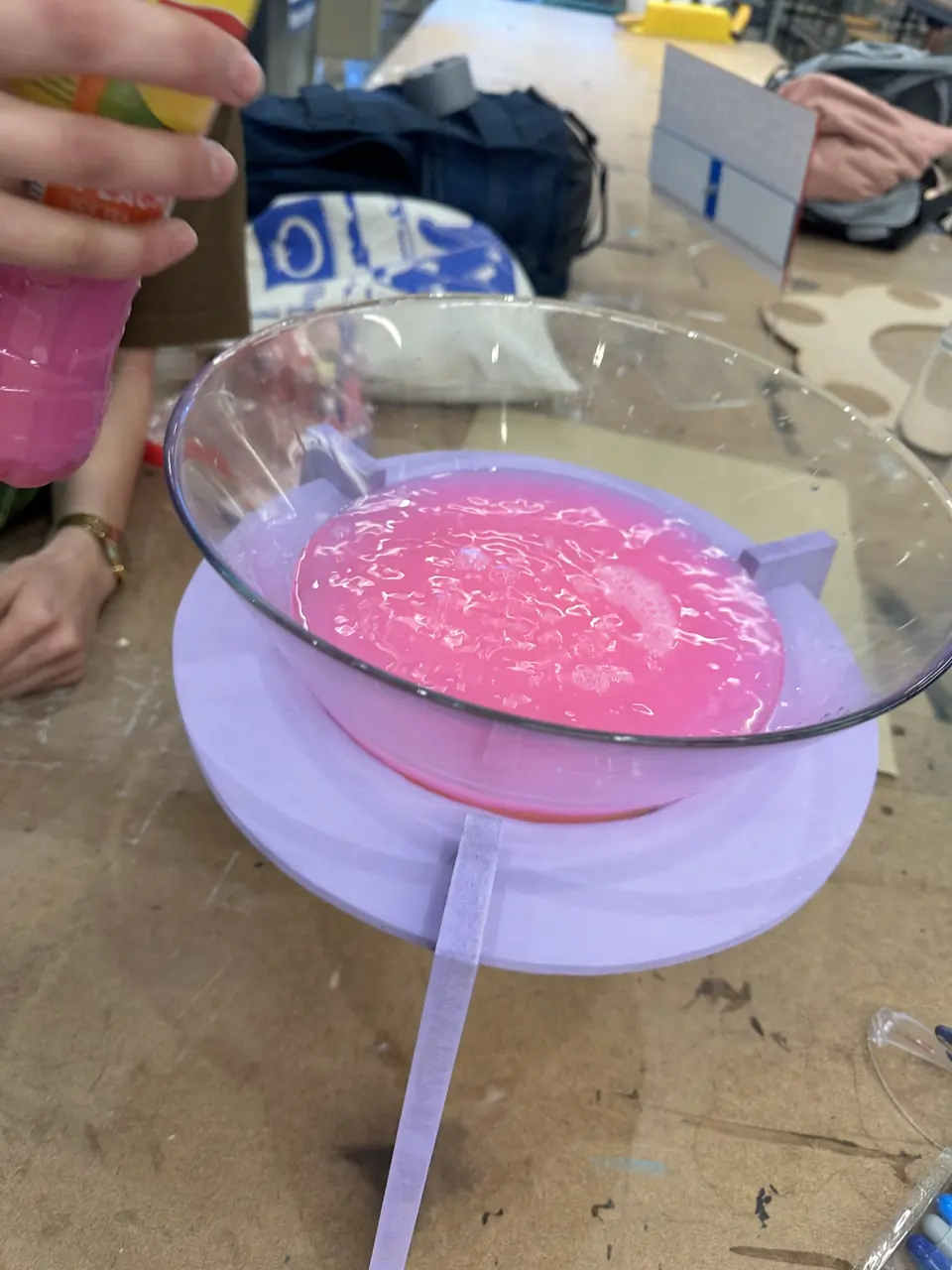
The first version floated a salad bowl on water inside a second bowl, with the tabletop on top. A cup shifted the water, the buoyancy changed and the surface tilted. It showed negotiation directly, and it was too sensitive and too risky for an exhibition. The second version replaced the open water with absorbent water beads. They kept the sliding and tilting and made both slower and easier to control.
We kept the scene sparse so the table could explain itself. Visitors sat down beside it, moved cups and watched the surface react. One person would restore the balance while another tested how far a cup could push it. The chairs, the cups and the room became part of the work. Stability came from shared attention and adjustment.
- Bennett, J. (2010). The agency of assemblages. In Vibrant Matter: A Political Ecology of Things (pp. 20–38). Duke University Press.
- Halberstam, J. (2011). Introduction: Low theory. In The Queer Art of Failure. Duke University Press.